

The main difference is larger RVs often feature residential amenities like full bathrooms, multi-room setups, and onboard generators, campers focus on compact efficiency, lower cost, and easier towing. An RV is an umbrella term for any motor vehicle or trailer equipped with living space and amenities for camping, including both motorized drivables and towables. A camper generally refers to smaller, towable units like travel trailers, pop-ups, or teardrops or models mounted directly on a truck bed. Ultimately, all campers are RVs, but not all RVs are campers. The sections below cover those points so you can match the right type to your situation.
How to visually identify an RV vs. a camper
Distinguish by propulsion
If the unit has a permanent cab and a steering wheel, it is an RV. You drive it like a van or bus.
If it has a hitch, ball mount, or sits in a truck bed, it is a camper. It moves only when pulled or carried.
Clarify the ‘Camper Van’ confusion
A camper van is not a camper. It is a Class B RV built on a van chassis.
It has a drivetrain and is driven, not towed. Do not confuse it with a Class C RV, which has a cabover section above the front.
Define the visual markers for towables
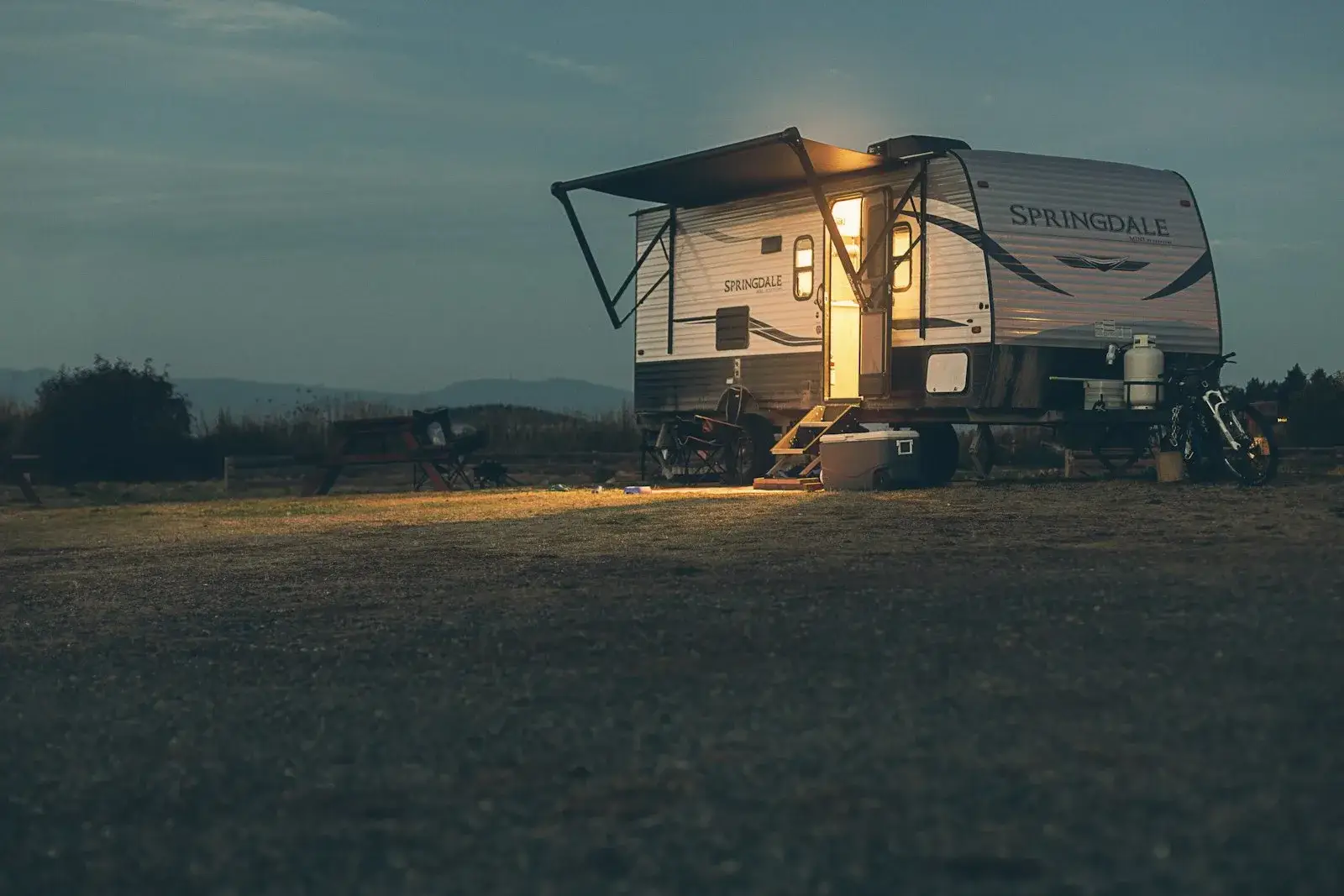
Travel trailers show a flat front hitch at the nose.
Fifth wheels show a gooseneck hitch that reaches over the truck bed rails.
Truck campers sit over the rear axle of a pickup, with no wheels of their own.
Explain folding campers
Some campers have canvas sides that fold out. These are folding campers, a subtype of towable camper.
They tow on a frame and expand at the site.
Towing capacity vs. payload rating
Tow rating vs payload rating
Tow rating is the maximum weight a vehicle can pull behind it.
Payload rating is the maximum weight a vehicle can carry inside or on its bed.
A truck can have a high tow rating but a low payload rating, or vice versa.
Truck camper payload needs
Truck campers load weight onto the truck bed. They use payload capacity, not towing capacity.
That load can be heavy enough to require suspension upgrades or stronger tires.
Failure modes of exceeding limits
Exceeding tow limits can cause trailer sway and loss of control.
Exceeding payload can crush suspension or damage the truck frame.
Overweight combinations can overheat transmissions and break legally allowed operation.
None of these are safe to guess around.
Where to find your vehicle’s limits
Open the driver’s door and read the sticker on the jamb.
Your owner’s manual lists the same numbers.
Do not rely on the truck’s model name or sales brochure.
The arrival sequence: setup and teardown
RV arrival process
You drive the RV onto the pad and put it in park.
Then you level the rig, deploy slide-outs if present, and connect utilities at the pedestal.
The steps are contained within one vehicle.
Camper arrival process
You back the trailer onto the pad, often with a spotter guiding.
Then you unhitch or unload the truck, set stabilizer jacks, and hook up utilities.
The camper and the truck are separate objects to manage.
Detached vehicle factor
With a camper, your truck remains free to drive to the store or trails.
With an RV, you either tow a second car behind or leave the RV in place and walk.
That changes how you move once parked.
Weather and solo difficulty
Unhitching a camper exposes you to rain and wind while outside.
Stepping out of an RV keeps you under a roof until the door closes.
Solo setup is harder with a camper because you must watch the hitch from outside.
Hidden costs: fuel, storage, and insurance
Fuel efficiency
Large motorhomes use more fuel per mile than a pickup pulling a trailer of similar size.
But the trailer option requires you to own a truck capable of the job.
Compare the combined fuel use of both vehicles, not just the camper alone.
Insurance differences
Campers may be covered under an existing auto policy when parked, or need a standalone trailer policy.
RVs need specialized coverage that treats the unit as both a vehicle and a dwelling.
The dwelling part protects the interior when it is parked and lived in.
Storage fees
Campers often fit in a home driveway or backyard.
Large RVs may break HOA rules or be too tall for a garage, forcing paid storage.
Storage cost is a recurring item absent from the purchase price.
Maintenance costs
RV tires are commercial grade and cost more to replace than trailer tires.
Motorhomes add engine and transmission service to the normal roof and floor upkeep.
Campers skip engine cost but still need tire, brake, and seal maintenance.
Licenses, registration, and insurance requirements
Titling differences
RVs are titled as motor vehicles, like a car.
Campers are titled as trailers, with no engine title attached.
That affects how you transfer ownership.
Driver’s license requirements
Federal rules set 26,001 lbs as a threshold for commercial license needs.
Many states apply similar weight limits to combined RV plus towed car, or truck plus camper.
Check your state’s DMV before driving a heavy combination.
Insurance necessities
RV insurance must cover liability on the road and dwelling value at the site.
Camper insurance often focuses on liability for the trailer, with the truck policy covering the tow vehicle.
Confirm both before leaving the lot.
Depreciation and common failure modes
Depreciation
Both types lose value after purchase, with the earliest years showing the largest drop.
A used unit can be a better value if inspected for damage.
Camper failure modes
Water intrusion causes floor rot and roof leaks in travel trailers and pop-ups.
Frame rust weakens the structure over time.
Canvas sections on folding campers can mildew or tear.
RV failure modes
Engine and transmission wear follows normal vehicle use.
Delamination happens when fiberglass siding separates from the frame.
Both require attention before they spread.
Inspection tips
Walk the camper floor to feel for soft spots.
Check RV tire sidewalls for dry rot and look under the engine for oil leaks.
If you find major issues, a repair shop should assess them. In St Cloud, All Campers repairs RVs and campers and can inspect used units before you buy.
If you are shopping the used market, All Campers sells used RVs and campers in St Cloud and can show you both types side by side.
FAQ
What is the main difference between an RV and a camper?
An RV has its own engine and drives. A camper is towed or carried by another vehicle.
Can you drive a camper?
No, unless it is a camper van, which is actually a Class B RV and is driven. A trailer or truck camper cannot move on its own.
How do I know if my truck can pull a camper?
Read the tow rating on the door jamb sticker and the payload rating in the manual. Match those numbers to the camper’s loaded weight, not its empty tag.
Which is cheaper, an RV or a camper?
Campers usually cost less to buy and can be stored at home. But you need a truck capable of towing or carrying. RVs bundle the vehicle and living space but add fuel and storage costs. Total cost depends on your existing vehicle and how often you use it.
Check your vehicle’s door jamb sticker before you compare prices. A unit that exceeds your truck’s rating will cost more in repairs than it saves upfront.