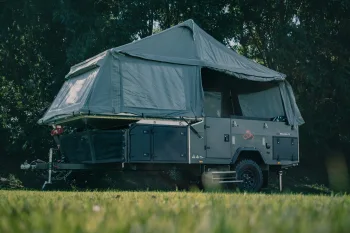
Without a good system in a camper, cabinets fill up quickly and small areas can become cluttered. When a camper is well organized, daily tasks become easier and the space feels more comfortable.
Whether you travel for a weekend or spend weeks on the road, a few simple habits can help you keep everything in order.
Before organizing your camper, remove everything from cabinets, drawers, and storage areas. This step helps you see exactly what you have packed. Many campers carry items they rarely use.
Sort your items into simple groups such as kitchen supplies, clothing, tools, and outdoor gear. As you go through everything, set aside items that are not needed for most trips. Reducing the number of items you bring will make organizing much easier.
Every camper has a few key storage areas including overhead cabinets, under bed storage, kitchen drawers, and exterior compartments. It helps to decide what type of items will go in each space before putting things back.
For example, kitchen items should stay near the cooking area. Clothing should stay close to sleeping areas. Outdoor gear should be stored near the door or in exterior compartments. Keeping related items together makes daily routines much simpler.
Small containers can turn a messy cabinet into a well organized space. Instead of loose items sliding around, place similar items together in bins or baskets.
Clear plastic containers are useful because you can see what is inside without opening them. Labels can also help everyone in the camper know where items belong. When something is used, it is easy to return it to the right spot.
You may want separate containers for cooking tools, cleaning supplies, snacks, and bathroom items.
Camper cabinets are often deeper than they appear. Without a system, items can stack on top of each other and become difficult to reach.
Shelf organizers or small baskets can divide the space into sections. This allows you to store plates, bowls, cups, and food items more efficiently. Non slip shelf liners also help prevent items from sliding while the camper is moving.
Plates and bowls can be stored in vertical racks or padded holders so they stay secure during travel.
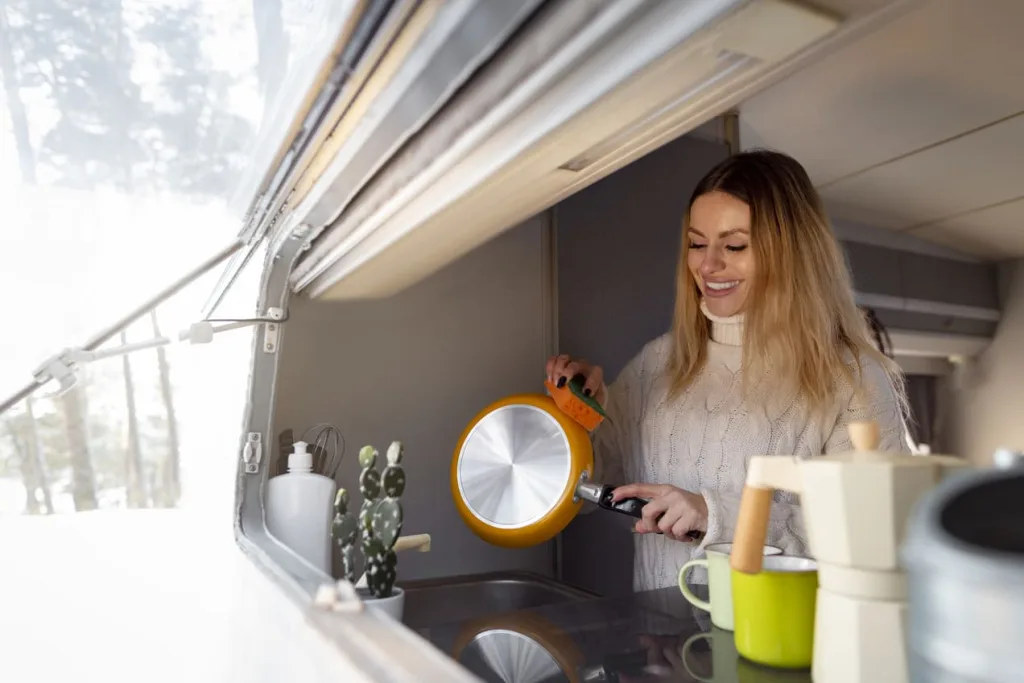
The kitchen is one of the most used areas inside a camper. Bringing too many cooking tools can quickly fill every drawer.
Choose a few basic items that can be used for many types of meals. A skillet, a medium pot, a cutting board, and a few utensils are usually enough for most trips. Stackable cookware works well in small spaces and saves cabinet room.
Camper refrigerators are smaller than home refrigerators, so it helps to plan meals before the trip. Try to pack only what you expect to use within a few days.
Small refrigerator bins can help separate drinks, vegetables, and prepared foods. Keeping similar items together makes it easier to find what you need without digging through the entire fridge.
Avoid overpacking the refrigerator. Air needs to circulate to keep food properly cooled.
Large suitcases take up valuable space in a camper. Soft duffel bags or packing cubes are much easier to store in small cabinets or under the bed.
Rolling clothes instead of folding them helps save space and keeps items easier to see. Packing cubes are helpful for separating shirts, pants, and smaller items such as socks or undergarments.
Try to bring clothing that can be worn in different combinations. This reduces the amount you need to pack and leaves more room in your storage areas.
Vertical space is often overlooked in campers. Walls and doors can provide extra storage without taking up valuable floor space.
Hooks can hold jackets, hats, towels, or small bags. Hanging organizers on closet doors or cabinet doors can store shoes, toiletries, flashlights, or small tools.
By using these areas, counters and tables stay clear and the camper feels less crowded.
The bathroom in a camper is usually compact, so keeping it organized makes a big difference. Small baskets or containers can hold toiletries, soap, and personal items.
Camping equipment can quickly bring dirt and clutter into the camper if it does not have a proper storage spot. Items such as folding chairs, grills, extension cords, and outdoor mats should have a designated place.
Many campers include exterior storage compartments that work well for larger items. Storing outdoor gear outside keeps mud and dust from spreading into the living area.
Even a well organized camper can become messy once the vehicle starts moving. Before driving, check that cabinets are closed and loose items are secured.
Rubber shelf liners help prevent dishes and containers from sliding. Tension rods can also keep food items in place inside cabinets or refrigerators.
Taking a few minutes to secure everything before leaving can save a lot of time cleaning up later.
Keeping a camper organized is easier when everyone follows a few simple habits. After using an item, return it to the same place. Wash dishes soon after meals and wipe down counters at the end of the day.
Because the space is small, a few minutes of daily cleaning keeps everything looking neat. This also prevents clutter from building up during longer trips.